Choosing well · EDITORIAL GUIDE
Choose pens and notebooks by purpose
Picture your writing routine before choosing a brand.
UNRE LABS EDITORIAL · 2026.10.17
Choose one writing situation first
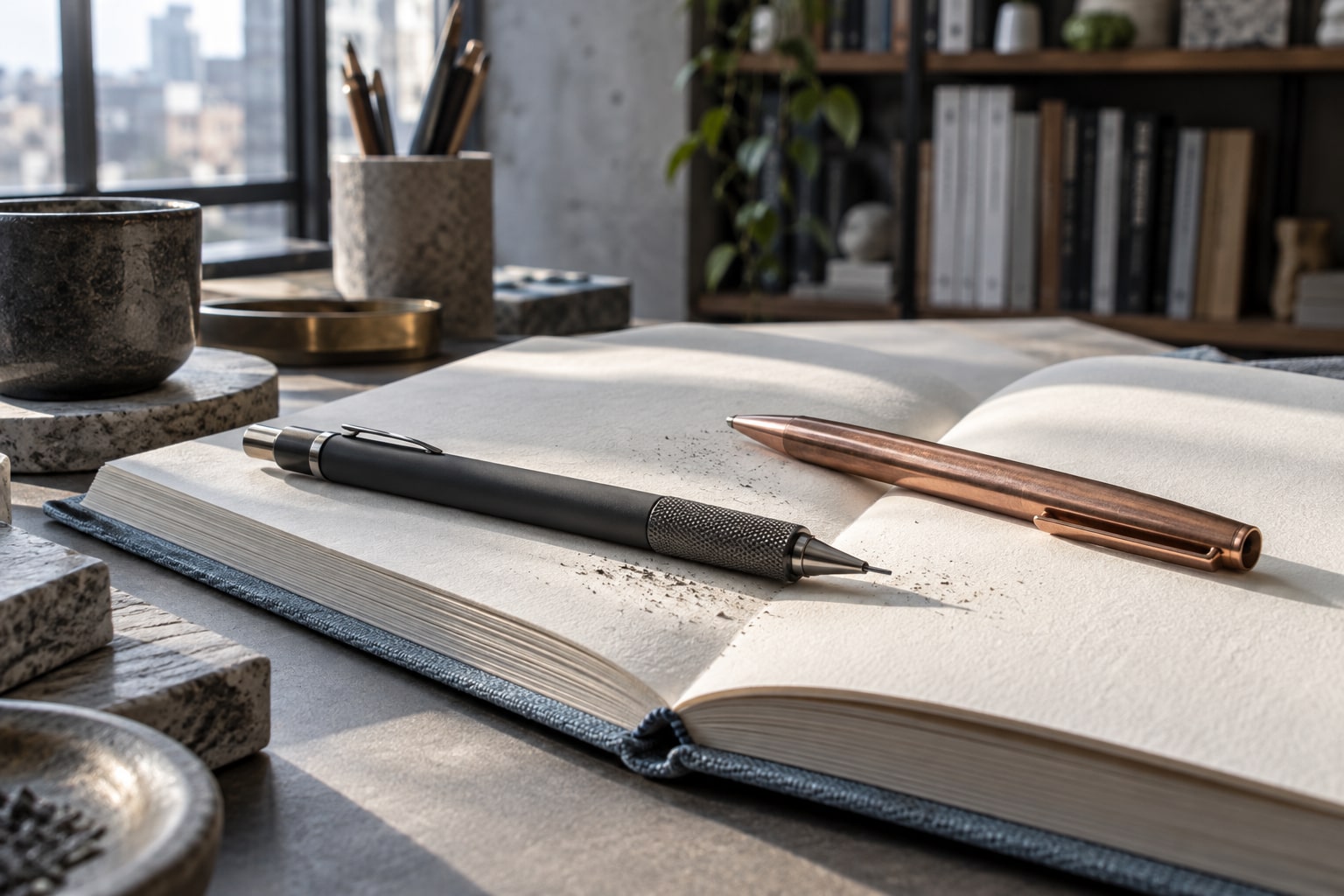
Before comparing popular pens or notebooks, choose a task: taking brief notes while standing, writing at a desk or checking plans while travelling. Each places different demands on a tool. Think about how much you write, how long you carry it, the space available and how often you return to earlier pages. Begin with a situation that actually occurs in your week.
Trying to satisfy every purpose in one notebook can create conflicting requirements. Make one task the priority and label the others as optional benefits. Describe actions such as finding a page during a meeting or taking notes beside a laptop. Keep appearance preferences in a separate column so that an attractive design remains part of the decision without obscuring practical needs.
Test the pen and paper together
A pen's usefulness depends partly on the paper you use with it. Where testing is permitted, write several lines at your normal size and inspect the line, handling while the ink dries and the reverse of the page. A short shop test cannot establish every aspect of long-term comfort. Distinguish what you observed there from what only repeated use could show.
Record feathering, show-through and ink penetrating the paper separately instead of reducing everything to “good paper” or “bad paper.” Name the pen-and-paper combination involved. If testing is unavailable, compare the manufacturer's description with your essential requirements and leave writing feel unconfirmed. Do not describe an untested combination as a personal review.
Consider handling and replacement supplies
Alongside line width and colour, consider where you grip the pen, its shape, how the weight feels and the cap or click mechanism. If you intend to write longer passages, a few normal sentences can be more informative than a single flourish. Another person's preference is useful context, but their hand and writing posture are not yours.
For continued use, check the refill or cartridge code, availability and replacement instructions. A similar shape is not proof of compatibility. For fountain pens, follow the maker's ink and care guidance; PILOT, for example, cautions against mixing inks. This is a reminder to consult the relevant instructions, not a universal cleaning procedure for every pen.
Compare the notebook open and closed
Closed dimensions help with carrying, but desk space should also be considered with the notebook open. Decide whether it will sit beside a computer, between reference sheets or on a small table. For daily carrying, consider the bag compartment and contact with other objects. Check weight and thickness when that information is available, rather than judging from a front-cover photograph alone.
Ruled, grid and plain pages are alternatives for different tasks, not a hierarchy. Consider line spacing for prose, visual interference when drawing and the amount of information a planning page needs. Sketch a sample page using your normal handwriting size. That small exercise can reveal whether the intended layout leaves useful working space.
Compare candidates using explicit priorities
For each candidate, note the task, essential condition, unresolved concern and total initial cost. A fictional meeting notebook might prioritise convenient access to a spread, while a travel notebook prioritises quick handling. Describing which situation each candidate suits is often more useful than calculating a single overall score.
Include immediately necessary refills, covers or other supplies in the cost. You do not have to purchase every accessory at the outset; wait for a real need where practical. If an untested feature is decisive, keep alternatives such as trying a small quantity or continuing with your current tool. The comparison should make a decision clearer, including a decision not to buy.
Revisit the choice after ordinary use
After a week, ask whether you used the tool in the intended situation. Did you carry it, find the relevant pages and have enough working space? Retain the first impression and add the later observation with the period of use. A changed opinion is useful evidence about your own routine, not a reason to erase the original note.
Replace broad praise with an example: fewer interruptions while finding meeting notes, or inconvenient weight in a bag. Before replacing the tool, consider whether a different page layout or carrying fewer notebooks would solve the problem. Learning how you work gives the next purchase a clearer purpose than following a new release alone.
Official references
Expanded and reviewed: 17 October 2026
Shopping and related products (advertisement)
Examples to compare when choosing a pen and paper for a particular task: a single-colour black 0.5 mm pen and an A5 grid notebook, sold separately. These are not tested recommendations or a bundled set. Check nib width, ink type, notebook size and ruling. This link goes to a Japanese retailer. International delivery is not guaranteed; check supported destinations and payment terms.
Uni Jetstream 0.5 mm black ballpoint pen SXN15005.24
Related product or accessory
Check the seller’s page for price, availability, shipping fees and delivery regions.
As an Amazon Associate, UNRE Labs earns from qualifying purchases.
Disclosure: Contains affiliate links.