GUIDE · 2026.10.17
Choosing a fountain pen nib: EF, F and M
Use your normal handwriting and paper to turn nib labels into a practical shortlist.
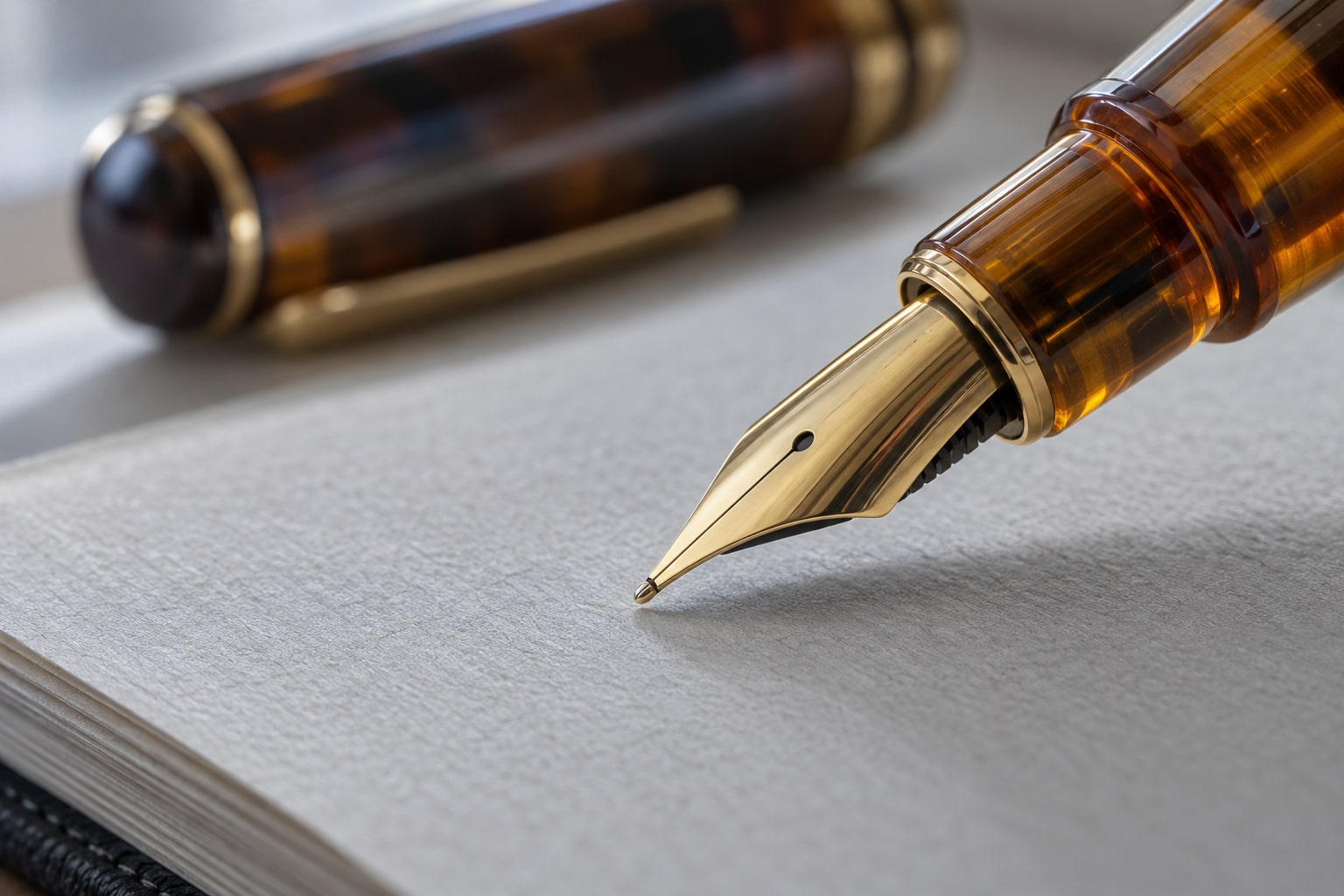
Treat EF, F and M as manufacturer labels
PILOT describes EF, F and M as extra-fine, fine and medium. Start with these labels, but do not treat them as a universal ruler shared by every maker. Our approach is to use the names to create a shortlist, then compare the actual writing task. A small planner entry and a spacious letter place different demands on a nib. Identify the smallest place in which you normally write. This gives you a reason to consider a fine option without assuming that finer means more advanced, or that a broader nib belongs to a higher price category.
Begin with the space available on the page
Choose a planner or notebook you already use and identify a real appointment box, ruled line or address field. Write a short entry at your normal size. If you do not own a fountain pen yet, your current pen can establish the space you need; it cannot establish how an untested nib will write. Prepare a sample containing your usual letters or characters, numbers and punctuation. A meeting time and a brief reminder reveal more than an isolated decorative letter. In English, include dates and several sentences so that the sample resembles the record you want to keep.
Keep the testing conditions with your notes
Follow the shop’s instructions when testing and ask before using your own paper. If only the supplied sheet is available, record that limitation. Different paper conditions make it harder to attribute every visible difference to a nib label. Note the maker, model, marked nib size, paper and ink where known, along with the sample text. Separate preference from observation: “I liked it” and “the small numbers remained readable” answer different questions. A brief trial does not establish long-term reliability or comfort during a lengthy writing session. Keep conclusions within what you were actually able to observe.
Do not press harder to manufacture a wider line
PILOT cautions that excessive pressure can open the nib slit and affect the line, ink flow or nib shape. Pressing harder because a line seems too fine is not an appropriate comparison method. Nor should the resulting mark be presented as the normal width of that product. If you usually use a ballpoint, notice whether you are gripping or pressing more firmly during the trial and ask the shop for guidance where needed. Specialist flexible nibs have their own requirements. You do not need to bend or adjust an unfamiliar nib to choose a suitable everyday pen.
Compare two tasks instead of inventing one score
Imagine testing two tasks with the same shortlist: a time and destination inside a small planner box, followed by a short letter on a spacious sheet. In the first task, inspect whether the numbers and characters remain distinct. In the second, see whether you can write at a size you enjoy. There is no need to combine the results into a single score. If different nibs suit different tasks, make the more frequent task the priority or divide roles with a pen you already own. This is a decision exercise, not a performance ranking of products we have not tested.
Keep the rest of the pen in the decision
A promising nib does not settle every practical question. Check opening and closing, carried length, filling method and officially compatible cartridges or converters. These details affect whether the pen fits your routine and how you replenish it. A series may not offer every nib in every colour, so verify the exact combination rather than joining information from separate product pages. Prices and supplied accessories also belong to the specific item being purchased. Keep three headings in your notes: the writing task, the test result and the product specification. They make unresolved questions easier to ask in a shop.
Choose with fewer unresolved questions
Before deciding, list what you established: the numbers stayed legible in the planner box, you understand the filling method, and the replacement item has been identified. Mark untested candidates as unconfirmed. Another writer’s review may use different paper, ink or lettering, so it cannot settle every question for you. After purchase, return to the notes if you change paper; a different result does not invalidate a record made under different conditions. EF, F and M are useful starting points. The goal is a combination that preserves your own writing clearly, with the remaining questions made specific enough to investigate.
Sources and references
Information checked and edited: 17 October 2026