Everyday notes · EDITORIAL GUIDE
Keep a stationery journal
Turn observations into better future choices.
UNRE LABS EDITORIAL · 2026.10.17
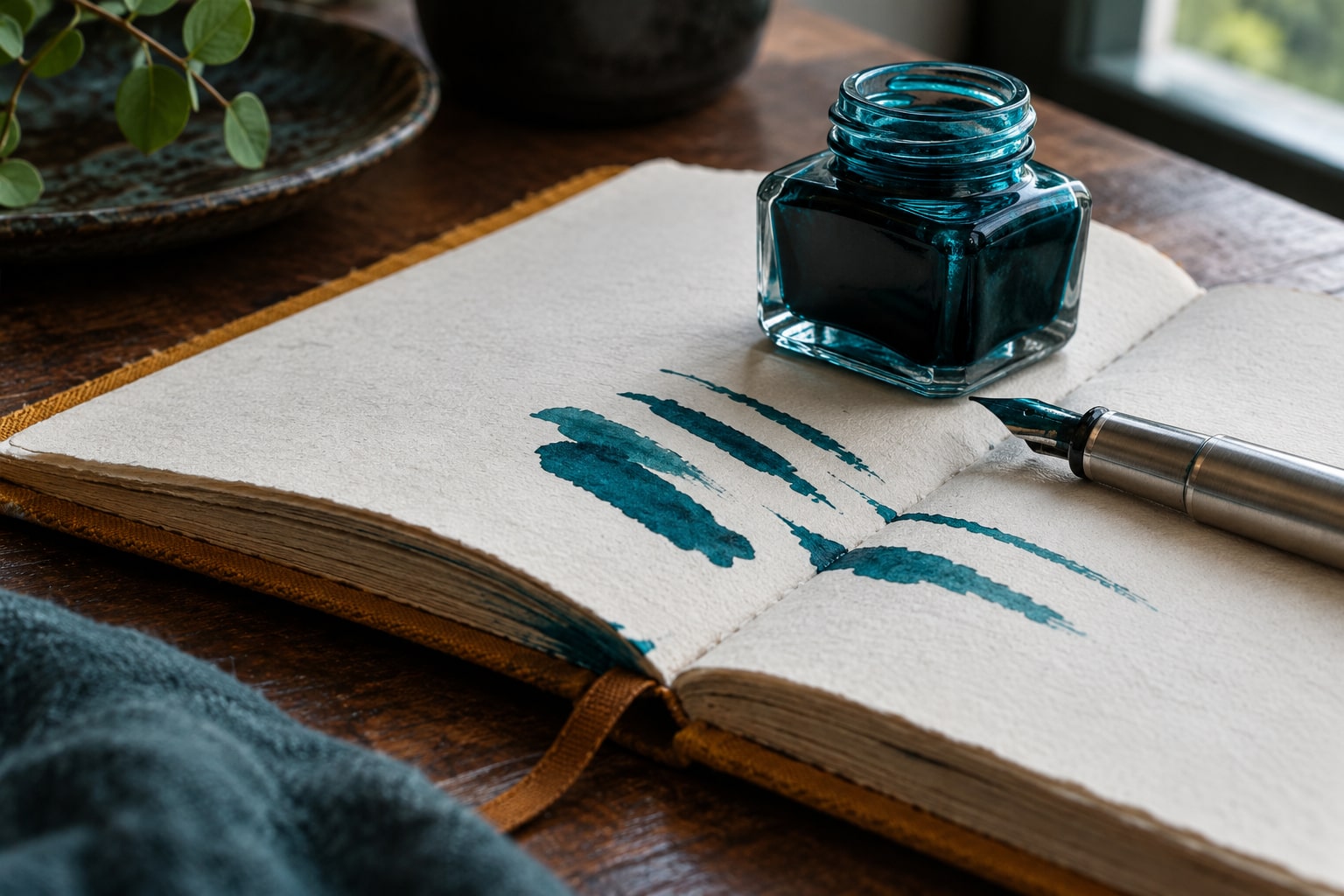
Record your conditions, not only a score
A stationery notebook is most useful when it explains how a tool was used. The same pen may produce different impressions with another paper, task or writing duration. Note whether you were making meeting notes, writing a diary or drawing, and identify the combination involved. Even a short description gives a later opinion context.
Keep the opening-day impression separate from an observation made after finishing a notebook. You do not need to erase the first because your view changed. Label an unpurchased product as a candidate, and distinguish a brief shop trial from extended use. A record of what you actually experienced is more useful than a review-shaped conclusion unsupported by use.
Link the pen to the paper
Record the maker, pen name, line width, ink type and colour where known. Identify the notebook, size and page ruling too. “Blue pen” and “usual paper” become ambiguous as supplies accumulate. When replacing a refill, retain the barrel information and update the writing component so that later differences can be traced.
Check an unknown code on packaging or official information. If it remains unknown, say so rather than guessing from appearance. Purchase place and date are optional but may help find the same specification again. For public extracts, retain information needed to identify the product and exclude personal details and order references.
Use a repeatable writing sample
A comparison page can contain normal-sized handwriting, a short paragraph, lines and a simple diagram in the same order. Repeating a task makes differences easier to examine than producing an entirely new decorative drawing each time. Do not force unusual pressure or a style you never use. Your everyday writing is the relevant starting point.
Inspect the dried surface and reverse, recording feathering, show-through and penetration separately. If comparing drying time, keep the method and conditions consistent; do not write a precise number of seconds unless you measured it. Photographs are useful records, but lighting and capture conditions limit exact colour comparisons. Note those limits when sharing the sample.
Separate observation from preference
“The line looks broad” and “writing is visible from the reverse” describe observations. “I like this for a diary” and “it is awkward in a small form” describe suitability for a task. Separating them lets you reconsider the same tool for a different purpose. One unsatisfactory combination does not establish that the product is unsuitable for every use.
Record handling in concrete situations too. Rather than only calling a pen heavy, explain whether the weight bothered you while carrying it or while writing at a desk. When recommending something, state that the view comes from those personal conditions. There is no need to generalise to another person's grip or writing pressure.
Keep replenishment and care history
Note when a refill or cartridge was changed, when an item entered use and when maintenance was performed. Identify the compatible replacement and follow the product's instructions. For fountain pens, consult the specific care and ink guidance instead of treating the journal as a reason to experiment with undocumented mixtures or procedures.
Separate unused supplies from those already in service. Check what you own before buying another spare, and consider whether it has a realistic role. Where storage or usability of an old supply is uncertain, consult the manufacturer rather than deciding from appearance alone. The purpose is to have suitable supplies available, not to accelerate consumption.
Use a monthly page to guide the next decision
Write down one frequently used combination, one reason an item went unused and one condition you want to test next. Purchase counts alone do not show whether a tool helped. A different combination of supplies you already own may answer the next question without buying anything. Attach the problem you want to solve to each wish-list item.
For digital photographs, include a date or record identifier in filenames. For a paper journal, an index of pen names and page numbers may be enough. Reduce the fields if recording becomes a burden. An ordinary notebook that helps you remember your own use is more valuable than an impressive specimen book you no longer maintain.
Expanded and reviewed: 17 October 2026
Shopping and related products (advertisement)
Midori MD Notebook A5, grid B, 15386006
Related product or accessory
A related notebook for logging item numbers, pen-and-paper combinations, refill dates and specifications to try next. You can start with a notebook you already own. If buying this one, check the A5 size and grid ruling. This link goes to a Japanese retailer. International delivery is not guaranteed; check supported destinations and payment terms.
Check the seller’s page for price, availability, shipping fees and delivery regions.
As an Amazon Associate, UNRE Labs earns from qualifying purchases.
Disclosure: Contains affiliate links.